

Beyond the Quick Bite: Why Sitting Down for Dinner Is Making an Australian Comeback
Reclaiming the Dinner Table in Busy Australian Suburbs
Across Australian suburbs, dinner has gradually been pushed into the gaps between work calls, school sport, commuting, homework and household administration. Meals are eaten in the car, at a desk or in separate rooms, while a family may technically share a home without sharing the same evening. The problem is not that convenience has become part of modern life. It is that convenience can quietly remove the regular moments when households notice how everyone is travelling.
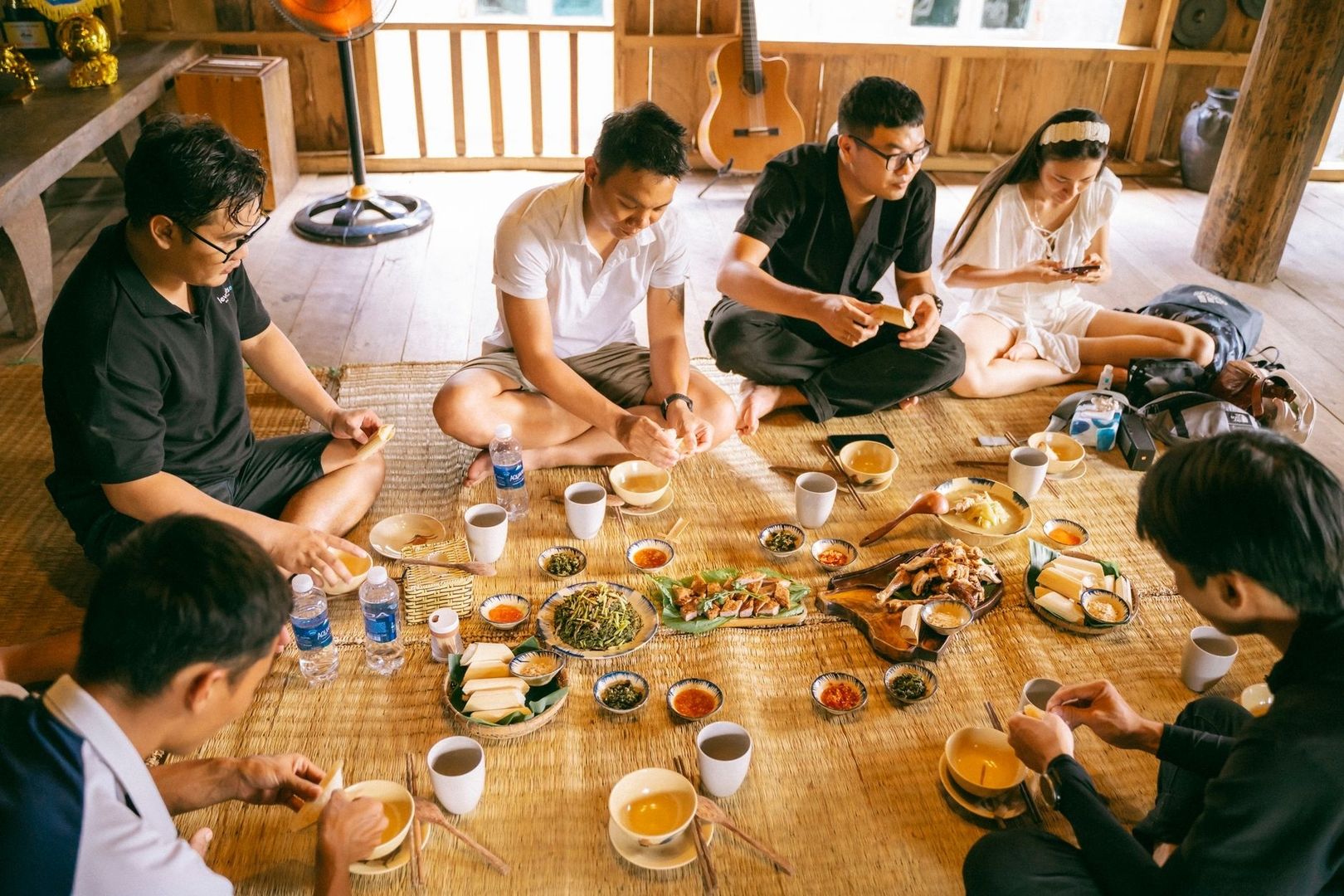
A modest cultural pushback is taking shape in suburban and regional communities. Families are protecting one evening a week, neighbours are organising shared cooking, and local food centres are treating meals as an opportunity for connection as well as nourishment. Food has long been a practical bridge across language, age and cultural difference, as explored in this account of how shared meals build belonging. A table does not solve every pressure, but it creates a reliable place to pause, talk and include people who might otherwise remain on the edge of daily life.
The Health and Mental Wellbeing Case for Communal Dining
The value of communal dining begins with pace. Sitting down encourages people to eat more deliberately, recognise fullness and pay attention to what is on the plate. For children and teenagers, that setting can also make healthy food familiar rather than a lecture imposed by adults. A meal containing vegetables, legumes, whole grains or fruit is more likely to be accepted when it is part of an ordinary shared routine, rather than presented as a separate health project.
The social setting matters just as much as the menu. Conversation gives family members a chance to exchange small updates before problems become crises. A parent can notice that a child is unusually quiet, a teenager can raise a concern without scheduling a formal discussion, and an older relative can remain involved in household life. These are low-cost forms of early support, particularly important when working hours and digital communication have made face-to-face contact less predictable.
These relational dynamics around food also reflect broader public health findings on collective food spaces. Beyond the household table, research into communal food environments-such as community gardens and shared food-growing spaces-has systematically evaluated associations with dietary quality, psychological wellbeing and social connection. The available evidence should not be overstated: neither a family dinner nor a community food initiative is a clinical treatment, and households facing severe distress require dedicated professional care. However, systematic reviews give practical weight to the idea that repeated relational contact around food production and shared eating fosters a healthier, more supportive environment. Readers can explore the empirical evidence on communal food-growing spaces in this community food spaces research review, while remembering that observational associations do not automatically prove that shared food initiatives alone cause better health outcomes.
- More regular nutrition can make it easier to include a broader range of foods and reduce reliance on last-minute takeaway meals.
- Lower social friction comes from having a predictable setting for ordinary conversation, not just discussions held when something has gone wrong.
- Greater emotional visibility allows household members to notice stress, loneliness or fatigue earlier.
- Stronger routine can help children and adults manage busy weeks without expecting every dinner to be elaborate.
Cultural Traditions Reshaping Everyday Meal Routines
Mediterranean food traditions offer one useful lesson, although they should not be reduced to a single formula. In many Mediterranean settings, meals have historically provided time for extended conversation, shared dishes and hospitality that includes relatives, friends and neighbours. The emphasis is not necessarily on expensive ingredients. It is on making space, serving food in a way that invites participation and allowing a meal to last long enough for people to arrive socially as well as physically.
Indigenous Australian food-sharing philosophies also remind communities that food can carry obligations, knowledge and belonging. Any reference to Indigenous traditions must be respectful and place-specific, rather than treating diverse Aboriginal and Torres Strait Islander cultures as one uniform practice. The broader lesson is that food can connect people to Country, kinship, seasonal knowledge and collective responsibility. That is a different proposition from transactional eating, where the main measure is how quickly a meal can be purchased and consumed.
Relational hospitality does not require a large house or a formal dinner party. It may mean adding a neighbour to a simple meal, sharing a pot of soup after a community meeting, or inviting extended kin to contribute one dish. Cooking together can also reduce the pressure on one host while giving children and adults a practical role. The table becomes a small civic space, where unfamiliar people can learn names, exchange local information and develop the trust that later supports community action.
| Fast convenience pattern | Intentional shared dinner |
|---|---|
| Food is selected mainly for speed | Food is chosen for simplicity, nourishment and participation |
| People eat at different times and locations | A common time is protected where schedules allow |
| Conversation competes with phones and screens | Devices are set aside for an agreed period |
| One person carries the cooking and cleaning load | Preparation, serving and washing up are distributed |
| Guests are treated as an extra responsibility | Hospitality is kept informal and shared |
Community Kitchens and Neighbourhood Food Hubs Leading the Way
The dinner table becomes more powerful when it extends beyond the household. Community kitchens, neighbourhood houses, food relief services and local cafés can provide places where residents meet without needing to host at home. This matters in regional communities, where distance, food insecurity and social isolation can reinforce one another. Foodbank Victoria”s Community Food Centres in Ballarat and Morwell combine access to food with cafés, cooking classes, workshops, volunteering and practical support. Their model treats food relief as a community asset rather than a handout delivered in isolation.
These hubs also strengthen local resilience. A shared meal can introduce residents to emergency relief organisations, community workers, volunteers and other families who may be useful contacts during a flood, fire, health crisis or sudden financial shock. The warehouses attached to the Foodbank centres distribute food locally and can support relief efforts during emergencies. In practice, the benefit is both immediate and long-term: people access affordable or free food, while the surrounding community builds relationships that are difficult to create through online neighbourhood groups alone.
Public dinners need sound systems behind the warmth. Community organisers should clarify who is responsible for registration, food handling, allergen information, temperature control, cleaning and waste disposal. In Victoria, councils generally handle registration and regulation for most community food-service activities, while Safe Food Victoria guidance supports understanding of food safety responsibilities. Organisers should check the relevant council requirements before serving the public, particularly when meat, dairy, seafood or donated food is involved.
- Confirm whether the venue and activity require council registration or approval.
- Record ingredients and identify common allergens clearly.
- Keep cold food cold and hot food hot, using appropriate equipment and procedures.
- Separate raw and ready-to-eat ingredients during preparation.
- Make handwashing, cleaning and waste arrangements clear to every volunteer.
- Keep a simple incident and contact plan in case food must be withdrawn or a concern is reported.
Practical Ways to Revive the Table in Everyday Households
Households do not need matching calendars to establish a shared meal. Working parents may arrive at different times, and teenagers may have sport, casual work or study commitments. The realistic aim is a dependable overlap, even if it lasts 20 minutes. One person might eat earlier, while another joins for tea and conversation later. On particularly busy nights, a shared breakfast or weekend lunch can preserve the same principle without pretending that every evening is equally available.
Rituals make the arrangement easier to maintain. A digital-free period can begin with phones placed in a basket, but the rule should be practical rather than punitive. A short question, such as “What made today easier or harder?”, can open conversation without turning dinner into an interrogation. Batch cooking with neighbours can reduce cost and labour, while a rotating arrangement means each household prepares one component rather than carrying the whole meal. The most sustainable routine is usually the one that leaves room for leftovers, imperfect timing and occasional cancellation.
A weekly dinner tradition can be established through a simple sequence that treats coordination as a household task rather than one person”s invisible labour.
- Choose the smallest workable commitment. Start with one shared meal each week, at a time that is genuinely available to most household members.
- Set a flexible menu. Use familiar, affordable dishes that can be prepared in advance, adapted for dietary needs and reheated safely.
- Assign roles. Share shopping, chopping, serving, conversation-starting and cleaning duties among adults and children according to age and ability.
- Protect the table. Remove unnecessary screens, prepare water and cutlery in advance, and keep the first gathering free from complicated expectations.
- Review the routine. After several weeks, ask what is working, which timing creates conflict and whether another household or neighbour could be included.
- Build outward carefully. Once the household rhythm is stable, consider a monthly shared meal with relatives, nearby residents or a local community group.
Building Stronger Communities One Evening Meal at a Time
Reclaiming dinner is not a demand for a return to an imaginary past. Australian households face real pressures, including long commutes, insecure work, caring responsibilities and rising living costs. The useful response is a modest, repeatable practice that fits those conditions. A shared meal can be a plate of leftovers, a simple barbecue, soup prepared in bulk or food assembled by several people. Its social value comes from attention and participation, not presentation.
For suburbs and regional towns, the implications reach beyond family wellbeing. Regular meals create opportunities to notice who is missing, welcome a new neighbour, share practical information and develop the trust required when communities face disruption. Setting an extra plate is therefore a small act with a wider civic effect. Start with one evening, keep the food uncomplicated and make room for another person. Over time, those ordinary dinners can turn fragmented households into more connected streets.